
Our Foundation of Faith and Freedom
The American Russian Relief Centre (ARRC) is a Christian humanitarian and human rights organization created to support Slavic emigration in the USA and to defend religious freedom.

In all our activities, we trust in the Lord and strive to follow His Word, which is the foundation of our work. We stand on guard for the rights of believers who have faced pressure and persecution in post-Soviet countries, and we advocate on behalf of those who have found temporary refuge in the United States through humanitarian programs.
When a foreigner resides among you in your land, do not mistreat them. The foreigner residing among you must be treated as your native-born. Love them as yourself, for you were foreigners in Egypt. I am the LORD your God.
The Story of Boris Perchatkin: The Struggle for Faith and Freedom in the USSR

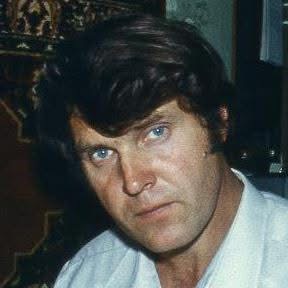
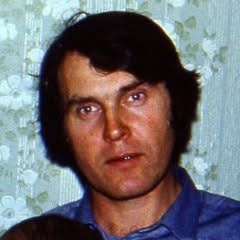
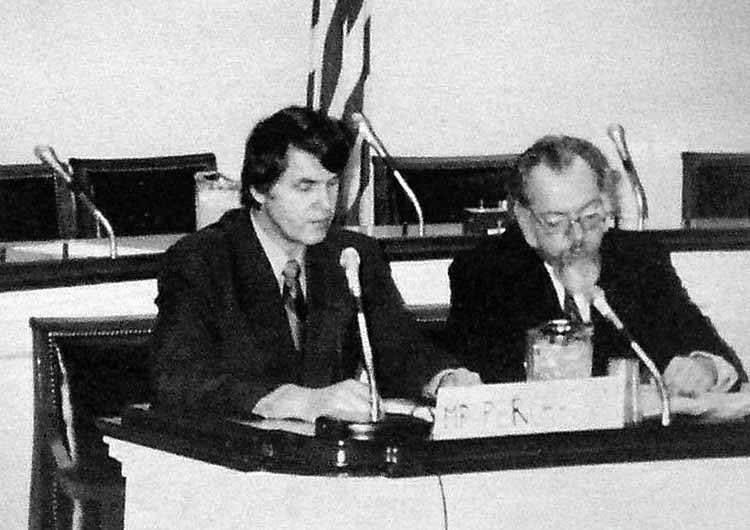
Boris speaking at a recent conference
This is the story of Boris Perchatkin, a testimony to the unprecedented persecution of Pentecostals in the USSR. This is the story of people who, in the midst of one of the most brutal regimes of the 20th century, chose to follow their convictions, whatever the cost. Their path led through camps, psychiatric hospitals, and betrayal by fellow believers, but ultimately led to freedom for thousands of believers and played a key role in the inclusion of traditionally persecuted denominations in the Lautenberg Amendment for religious refugees.
Family Roots and the 'Promised Land' on the Edge of the Gulag
The history of persecution for the Perchatkin family began long before Boris was born. His grandfather, a Baptist pastor, was arrested in the 1930s and died in prison. The family—grandmother with five children—was exiled in winter to Komsomolsk-on-Amur, where they were forced to live in a dugout, hiding from the cold due to the lack of any shelter. Boris's mother was tried three times, his wife Zinaida twice, and his stepfather, an officer, received 25 years for 'terrorism'. In the mid-1950s, a prophecy spread among Pentecostals about the need to gather in the Far East, in the city of Nakhodka—a former Gulag camp center. Believing families from all over the Union gathered there, settled in empty barracks, and developed entire valleys. Local authorities, in need of workers for port construction, looked with surprise at people who voluntarily came to a place of exile, where convicts and camp prisoners were sent.
Khrushchev's Persecutions and the First Spark of Resistance
The situation changed dramatically with the beginning of Khrushchev's anti-religious campaign (1958-1964), when Nikita Khrushchev promised to 'show the last believer on television' by 1980. Article 227 was introduced into the Criminal Code, under which 'illegal' religious activity was punishable by up to five years in camps and five years of exile. In Nakhodka, all church leadership and active community members were immediately arrested. The 'last straw' for believers was the cruel story of the family of Nikolai and Maria Boev. Nikolai, a former security officer who became a believer, was killed. His wife Maria was tried and given an unprecedented sentence: to take away not only the infant she was holding, but all future children she would bear. Their four children were taken away and scattered to orphanages throughout the Soviet Union. This story shook the community. A group of activists led by former military intelligence officer Vasily Patrushev and young Fyodor Sidenko developed a daring 'Consul' plan: to pass documents about the Boev case to the Japanese consul, who might attract international attention. Sidenko, working as a plumber in the hotel where the consulate was located, passed a copy of the verdict. However, the consul's apartment was bugged, and when Fyodor brought the remaining documents and an appeal to the UN, KGB officers burst into the room.
The 'University of Dissidents' and the Birth of the Emigration Movement
Sidenko and Patrushev were arrested. Fyodor was twice taken out for a mock execution to intimidate him, then sent to a special psychiatric hospital where he was tortured with insulin injections. Both were eventually sent to Mordovian political camps, which became a mistake by the authorities. There they entered the 'university of dissidents,' where they met Alexander Ginzburg and Andrei Sinyavsky, who helped develop a plan to reach a more effective and higher international level to tell about persecutions, tortures, and abuses. Inspired by the example of Jewish emigration, Pentecostal leaders decided to seek the right to leave. They organized a press conference in Moscow with the participation of Bishop Vashchenko, where they announced the desire of thousands of believers to leave the USSR. In December 1976, Patrushev, Vashchenko, and Perchatkin presented more than 400 biographies of believers, full of stories of repression, to foreign diplomats and journalists. The authorities responded by crushing the Moscow Helsinki Group: Ginzburg, Yuri Orlov, and Anatoly Shcharansky were arrested. Boris Perchatkin, who became the link with foreign representatives, was arrested in 1980 and convicted under the article 'Anti-Soviet agitation and propaganda.' In September-October 1982, the KGB conducted a campaign of intimidation. They killed more than 20 people throughout the USSR from Ternopil to Nakhodka in various places of activists fighting for exodus. In Nakhodka, 16-year-old Ivan Belousov was burned with blowtorches at night while riding his bicycle to collect grain for pigeons at Barchataya station before the port on the orders of the head of the fifth department, Perepechkin.
Kolyma and the Sophisticated Methods of the KGB
After a brief release, Perchatkin was arrested again in 1983 on a fabricated case of carrying weapons. This time, the military prosecutor's office conducted the investigation. He was brutally tortured: his collarbone was broken, five ribs were broken, his teeth were knocked out, and then he was placed in a death cell for several months. From there, he was sent in stages to Kolyma, one of the most terrible Gulag camps, which even in the 1980s remained 'hell on earth.' The conditions were inhuman: hunger, exhausting work that killed prisoners, abuse and beatings from foremen. The KGB used sophisticated methods: they fabricated testimony to pit comrades against each other, actively recruited agents, even among children, whom they forced to inform on their parents for contraband chocolate. Read about Boris's struggle in his autobiographical book 'Paths of Fire.'
Victory: Perestroika and the Lautenberg Amendment
Boris Perchatkin was released in 1986. With the beginning of Perestroika, he felt that KGB attention to believers had weakened and resumed contacts with foreign diplomats. Key was his meeting with US First Lady Nancy Reagan in Moscow in May 1988. He told her the story of his family: his executed grandfather-pastor, his mother tried three times, his wife tried twice, and his two terms with chemical torture and abuse. Shocked, Nancy Reagan insisted that he tell this story in the US Congress. On August 5, 1988, Boris Perchatkin testified at Congressional hearings. His testimony about systematic persecution for faith became the decisive factor for the adoption of the Lautenberg Amendment in 1989. This legislative act created the legal basis for granting refugee status to representatives of persecuted religious minorities from the USSR and opened the way to freedom for hundreds of thousands of people. Thus, the years-long struggle that began in barracks on the edge of the Soviet empire for the EXODUS of persecuted and tortured believers ended with God's victory. This story is a vivid example of unyielding faith and sacrifice of people who, despite the most brutal repressions, achieved the right to freedom.

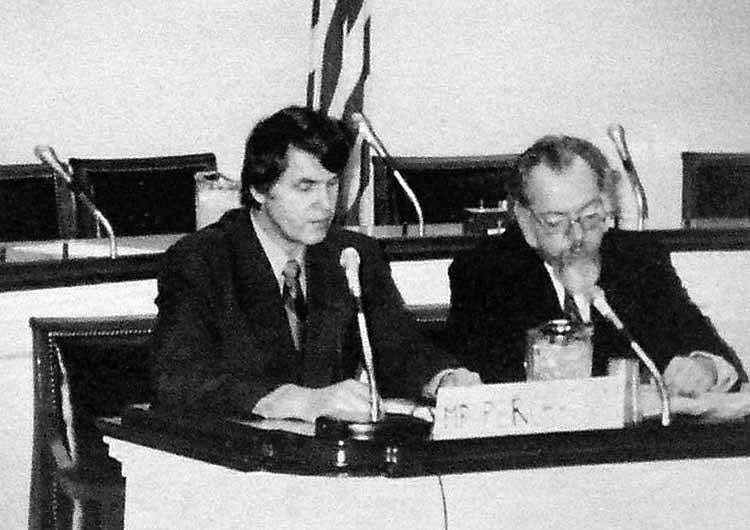
Boris Perchatkin is testifying in Congress.
Boris Perchatkin's Memoir
Download the complete memoir of Boris Perchatkin, detailing his journey from Soviet persecution to becoming a key advocate for religious freedom in the United States.
Paths of Fire
by Boris G. Perchatkin
Download the complete memoir of Boris Perchatkin, detailing his journey from Soviet persecution to becoming a key advocate for religious freedom in the United States.
Download PDFHistorical Documentation
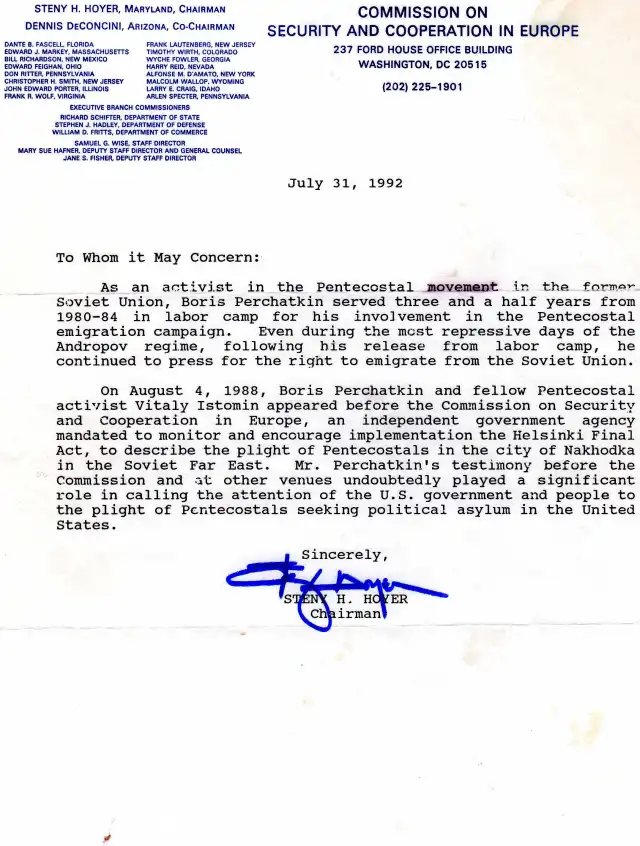
The reference letter from Boris Perchatkin's advocacy work before Congress, demonstrating the impact of his testimony on U.S. immigration policy.
Transcribed Text
COMMISSION ON SECURITY AND COOPERATION IN EUROPE
237 FORD HOUSE OFFICE BUILDING
WASHINGTON, DC 20515
(202) 225-1901
STENY H. HOYER, MARYLAND, CHAIRMAN
DENNIS DECONCINI, ARIZONA, CO-CHAIRMAN
July 31, 1992

To Whom it May Concern:

As an activist in the Pentecostal movement in the former Soviet Union, Boris Perchatkin served three and a half years from 1980-84 in labor camp for his involvement in the Pentecostal emigration campaign. Even during the most repressive days of the Andropov regime, following his release from labor camp, he continued to press for the right to emigrate from the Soviet Union.

On August 4, 1988, Boris Perchatkin and fellow Pentecostal activist Vitaly Istomin appeared before the Commission on Security and Cooperation in Europe, an independent government agency mandated to monitor and encourage implementation the Helsinki Final Act, to describe the plight of Pentecostals in the city of Nakhodka in the Soviet Far East. Mr. Perchatkin's testimony before the Commission and at other venues undoubtedly played a significant role in calling the attention of the U.S. government and people to the plight of Pentecostals seeking political asylum in the United States.

Sincerely,

[Signature of Steny H. Hoyer]
STENY H. HOYER
Chairman
Chronological Archive of Evidence
Documented evidence supporting Boris Perchatkin's legacy and the struggle for religious freedom
| Year | Source | Notes & First Page Details |
|---|---|---|
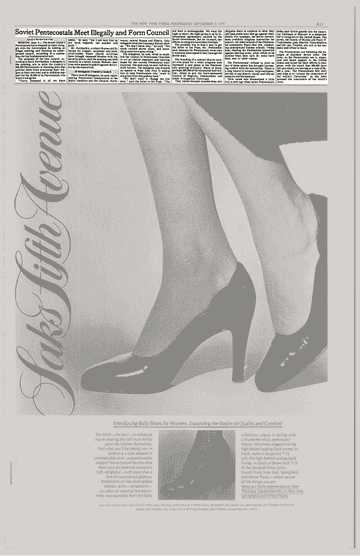
| 1979 | NYT Article | "Soviet Pentecostals Meet Illegally and Form Council — 20 Delegates." Describes underground Pentecostal gatherings, illegal under Soviet law, and attempts to organize a formal body of delegates. |
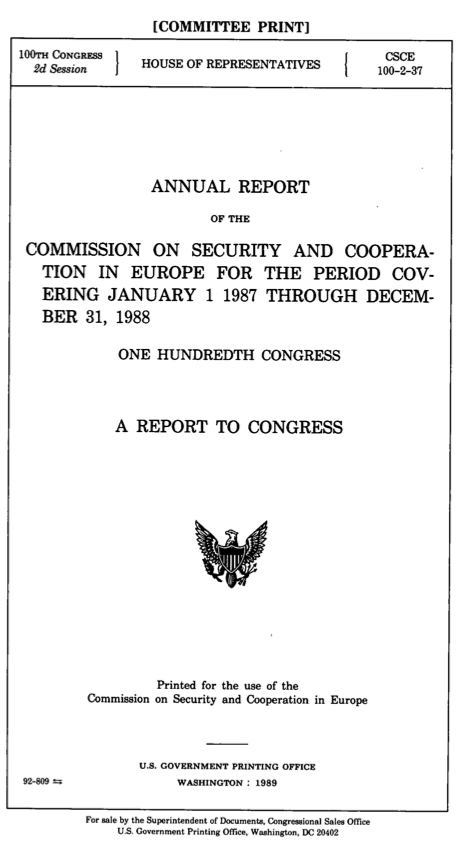
| 1987–1988 | Helsinki Commission Report | Annual Report covering 1987–1988 includes sections on human rights abuses, including religious freedom violations in Soviet bloc states. |
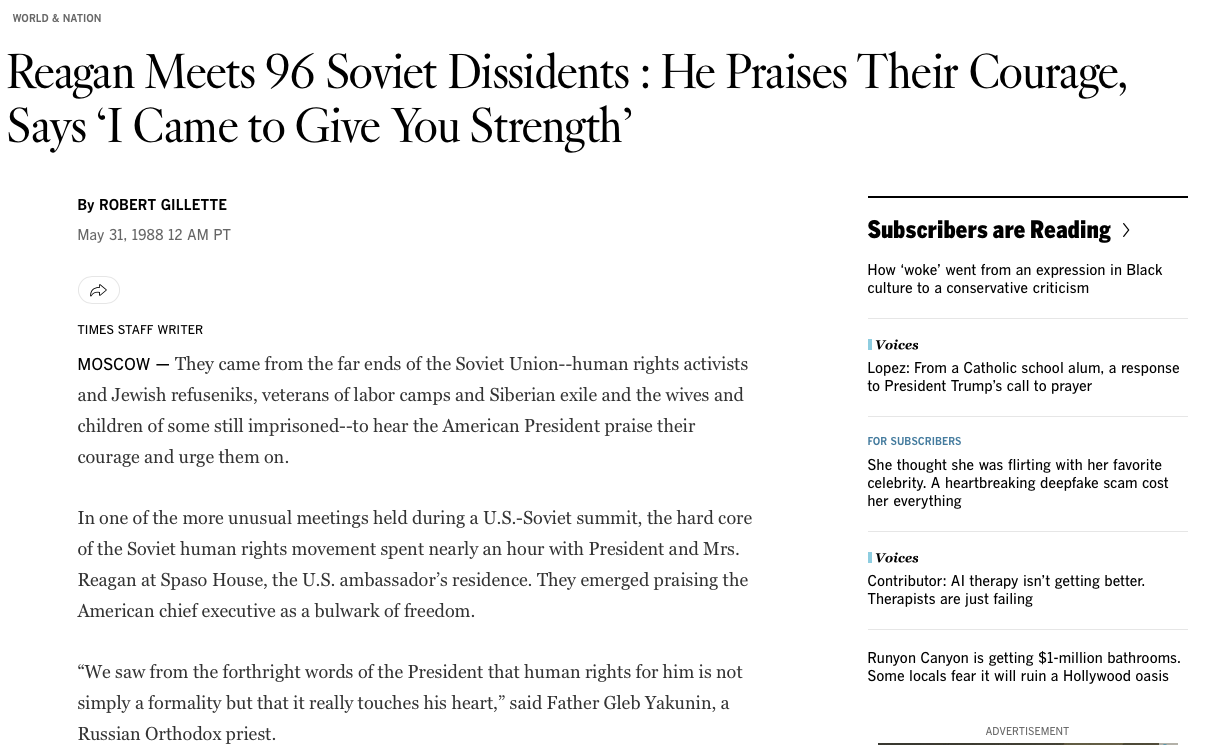
| 1988 | LA Times Article | May 31, 1988 media piece covering social or religious issues in that period. Full first page details available for review. |
| 1988 | NYT Article | "10 Years, a Postcard and Next Israel" — August 17, 1988. Reflects on a decade of developments and a looming shift related to Israel. |
| 2016 | CSCE Report | "Repression Against Evangelicals in the Former Soviet Union." Outlines systematic constraints, harassment, and legal obstacles faced by evangelical groups in post-Soviet states. |
| 2016 | CSCE Report | "Unregistered Religious Groups in Russia" — analyzes the status of religious groups lacking state recognition, legal risks, and administrative burdens. |
| Archival | National Archives | Catalog entry, record ID 179034005 — likely an archival document or declassified file. The catalog entry itself doesn't present a narrative front page. |
| 2025 | American Community Media | "Christian Pacifists in Russia, Ukraine Seek U.S. Protection" — modern article about persecution of Christian conscientious objectors and their efforts to appeal for U.S. protection. |
Our Work Today
ARRC combines humanitarian service with active representation of believers' interests at state and public levels. We are focused on practical action and advocacy to address the current challenges facing the Slavic immigrant community.
Church Collaboration
We interact with churches that have congregants from post-Soviet countries (Ukraine, Russia, Belarus, etc.) who are in the U.S. on temporary programs (U4U, TPS, CBP-1) and face difficulties with legalization.
Building Networks
Connecting churches across America
Government Advocacy
We conduct working trips to Washington D.C. to meet with government agencies, senators, congressmen, and human rights organizations to lobbying the renewal of the Lautenberg Amendment and the establishment of a new immigration quota for Christians from post-Soviet countries.
Capitol Hill Presence
Direct engagement with policymakers
Reporting and Analysis
We prepare analytical reports on the persecution of believers and Christian pacifists in post-Soviet countries and submit them to U.S. government structures.
Evidence-Based Advocacy
Comprehensive documentation and analysis
Human Rights Defense
We document facts of repression and prepare human rights appeals on behalf of those persecuted.
Protecting the Persecuted
Standing for religious freedom
Legislative Development
We develop project proposals that can be used for future legislative initiatives and humanitarian programs.
Policy Innovation
Creating solutions for the future